
Space STEM club at Dundee Science Centre
Dundee Science Centre hosted a cohort of pupils for a weeklong STEM club experience, where together they explored our neighbouring planets, stellar science, and space exploration.
As a mission led charity, Dundee Science Centre collaborated with community partner, St Mary’s primary school, to deliver memorable science experiences. Dundee Science Centre hosted a cohort of pupils for a weeklong STEM club experience, where together they explored our neighbouring planets, stellar science, and space exploration. Staff at St Mary’s benefited from an enhanced CLPL session, that succeeded in improving confidence and agency when engaging and communicating science topics, creating a legacy of empowered staff to continue creating memorable science lessons beyond the scope of the project. The project ended with a family drop-in session where parents and pupils explored the science behind the James Webb Space Telescope, exploration rovers, and star formation.
Co-creation with community partners
Dundee Science Centre partnered with St. Mary’s RC Primary School in Dundee to deliver the Explore Your Universe: Valuing Inclusion 2025 project. The programme aimed to provide inclusive STEM experiences to children, families, and educators in one of Dundee’s most deprived areas. By focusing on STFC science topics and engaging researchers, the project sought to foster belonging, agency, relevance, and skills among participants.
Focus on STFC science topics
The programme incorporated STFC science topics to inspire participants and connect them to real-world applications of STEM. Activities included:
- Astrophysics and Astronomy: Children explored the solar system, stellar science, and space exploration through hands-on activities such as building marble planets, astronaut training, and creating living models of the solar system.
- Stargazing with the JWST: Using an infrared thermal camera, participants were invited to discover the engineering behind the James Webb Space telescope and consider how we can view far away galaxies
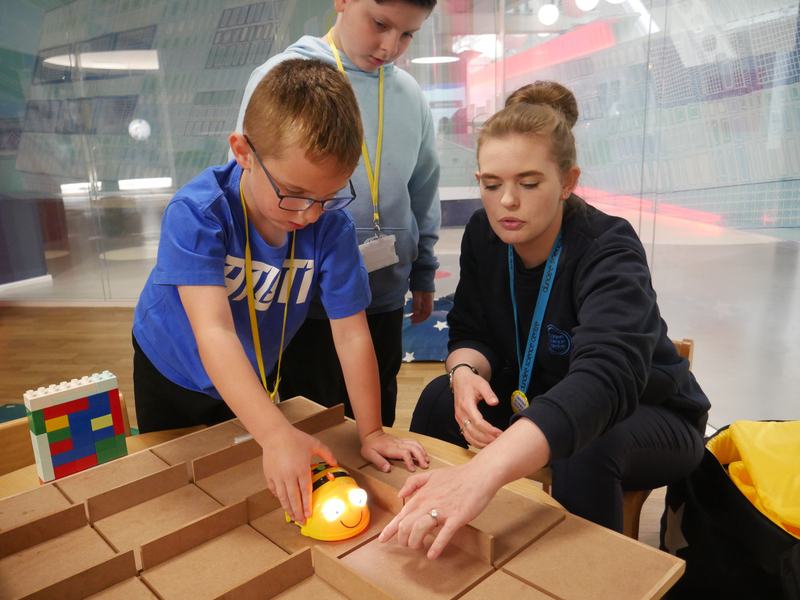
- ExoMars Mission and Rosalind Franklin Rover: Coding activities with Bee Bots introduced children to planetary rovers and their role ifappenn space exploration.
- Space Careers: A video from STFC researcher Dr. Aurora Sinclair highlighted her work, journey into physics/astrophysics, and local historical links to Dundee’s contributions to space science.
The inclusion of STFC science topics and researchers enhanced the programme’s relevance and inspired participants to see STEM as accessible and meaningful. For example, children expressed excitement about learning “about robots on Mars” and “astronaut training,” as documented in their logbooks.
“Yes, he came home every night full of exciting stories, he told me all about the human body teddy, coding, and space.” – Parent, STEM club feedback
Evidence of impact across inclusive participant outcomes
The programme focused on fostering belonging, agency, relevance, and skills:
- Belonging: The STEM club created a safe and welcoming environment with sensory-friendly spaces, trained staff, and behaviour management strategies. Parental feedback confirmed that children felt safe and happy, with one parent noting, “Yes, he came home every night full of exciting stories, he told me all about the human body teddy, coding, and space.”
- Agency: CLPL sessions empowered educators by increasing their confidence and ability to deliver engaging STEM lessons. One staff member shared, “I went away feeling more confident in my own ability to deliver engaging STEM.”
- Relevance: Activities connected STEM topics to everyday life and local history, such as the story of Dundee sisters Williamina and Joanna Fleming and their contributions to astrophysics. Parents observed increased interest in science and its relevance, with one stating, “It has been amazing, [redacted] has always liked to be busy, so to have a week of the school holiday where he has been engaged and learning has given us an opportunity to have time with his younger brother.”
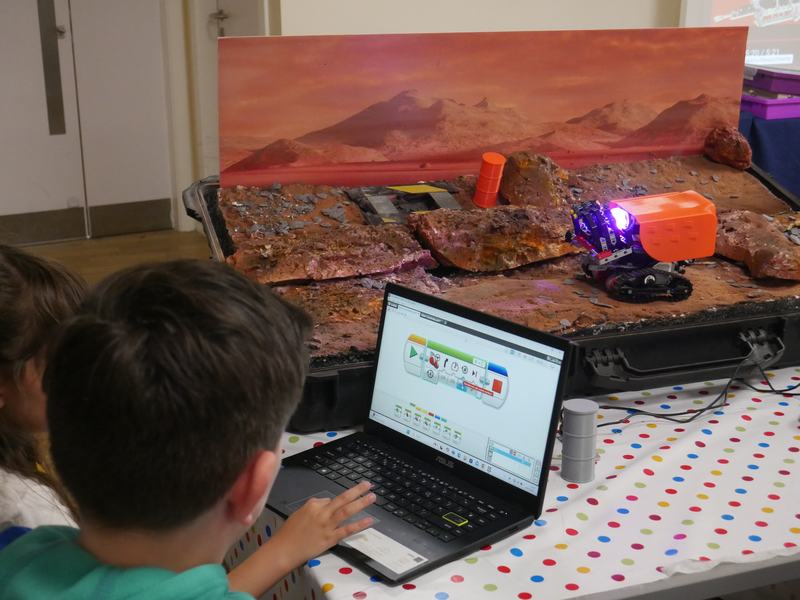
- Skills: Children developed coding skills through activities like programming Mars rovers with LEGO Mindstorms and Bee Bots. Logbook reflections highlighted their learning, such as “Today I learned: About tech and coding.”
What worked well
Several aspects of the programme were particularly successful:
- Involvement of the school and family development worker (SFDW): The SFDW’s presence throughout the STEM club improved behaviour management, communication with families, and support for children with additional needs due to their established relationship with both the children and their families.
- Family celebration event: The final-day event brought families together at Dundee Science Centre to celebrate the children’s achievements, with parents, guardians, and siblings all invited to showcase and commemorate the children’s achievements at the club. This created a positive conclusion to the week, which focused on the families as a whole rather than the individual children, building a further sense of community and increasing parental engagement. Feedback collection was also more effective during this event.
- Modified CLPL sessions: Hands-on activities and practical resources enhanced educator engagement and confidence, with staff expressing appreciation for the interactive format.
Challenges and lessons learned
The programme faced some challenges:
- Session duration: The original session length was reduced by one hour to better align with family routines, requiring adjustments to the schedule.
- Introducing complex topics: Simplifying nuclear physics concepts for primary-aged children proved difficult. Future sessions will include dedicated hands-on activities to make these topics more accessible.
- Engagement with STFC researchers: Establishing connections with STFC researchers and facilities was challenging, impacting the project timeline. Improved planning and communication will be prioritized in future projects.
One parent shared, “Huge difference – [redacted] and [redacted] have been able to have time for them, with having an older sibling who is Autism/ADHD not always possible to have days like these. Gave them huge amount of knowledge.” This quote highlights the programme’s success in creating a safe and inclusive environment for children, allowing them to engage in STEM learning without barriers.
“Enjoyed working through some of the problems we identified as a school and coming up with solutions. I therefore went away feeling more confident in my own ability to deliver engaging STEM” – St Mary’s Staff member, following CLPL.
Future plans
Dundee Science Centre looks forward to continuing its partnership with St. Mary’s RC Primary School and expanding its outreach efforts to further support STEM education and engagement.