Placing young carers at the centre of the experience as creators
By placing young carers at the centre of the experience as creators, performers and science communicators Winchester Science Centre's project built confidence, strengthened social connections and helped participants see new possibilities for themselves in science and beyond.
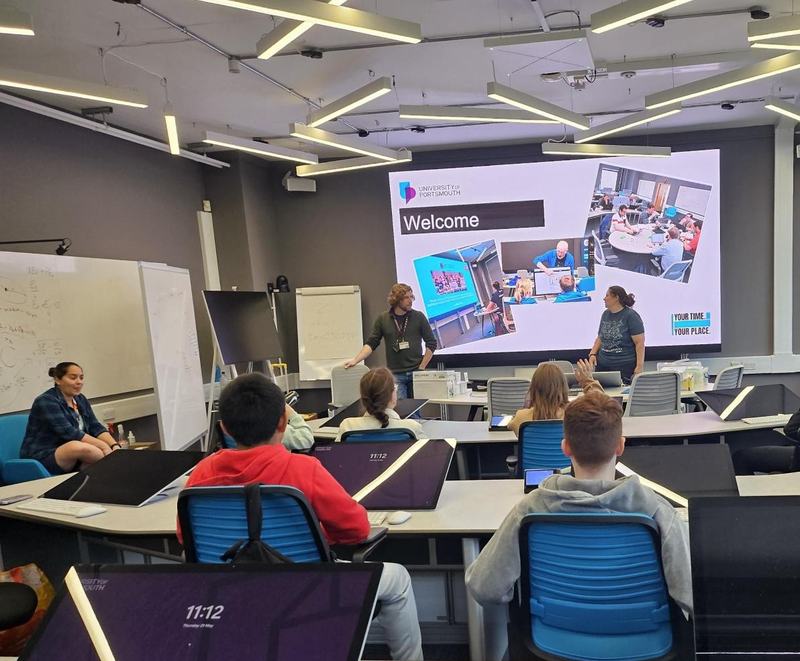
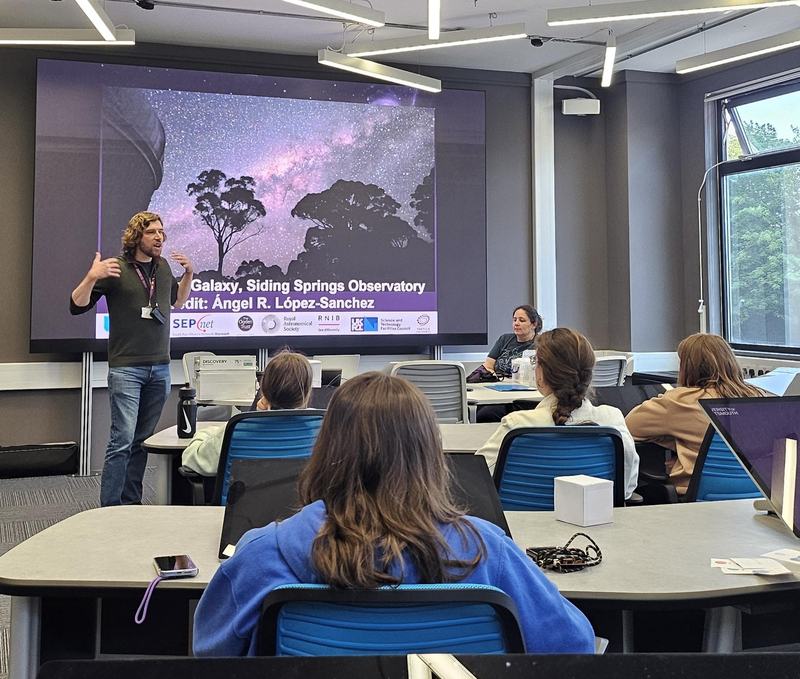
The team at Winchester Science Centre took young carers on a creative journey through space science, combining hands-on learning with performance and storytelling. Working with Eastleigh Young Carers and key partners, participants explored astronomy through workshops, planetarium experiences and a visit to the University of Portsmouth, where they met professional researchers.
The programme culminated in a youth-led performance featuring a planetarium show, dance and interactive elements, delivered to an audience of families and community members. By placing young carers at the centre of the experience as creators, performers and science communicators the project built confidence, strengthened social connections and helped participants see new possibilities for themselves in science and beyond.
Co-creation with a community group
This programme was co-developed with One Community Eastleigh Young Carers, supporting young people aged 9–13 whose lives are significantly shaped by caring responsibilities at home. Young carers often face reduced opportunities for education, socialising and enrichment, which can impact confidence and aspirations. This project was designed to respond directly to those challenges, creating a space where participants could relax, connect with peers and explore science on their own terms.
A core group of 10 participants attended regularly, with an additional 5–6 young people joining for specific sessions, reflecting the flexible attendance needs of young carers. The group had an even gender split and included a significant proportion of neurodiverse participants, shaping the inclusive design of the programme.
The project was delivered in collaboration with 2 key partners:
- The Point Theatre – providing performance space and event support
- University of Portsmouth Institute of Cosmology and Gravitation – connecting participants with space researchers
Activities took place across four locations: the young carers’ usual meeting space, The Point Theatre, the University of Portsmouth and Winchester Science Centre. This progression supported participants to build confidence in familiar environments before exploring new spaces.
Activities and STFC science topics
Exploring space science
Participants engaged in interactive planetarium shows (mobile and full-dome), space-themed workshops and hands-on creative sessions to explore scientific ideas. These experiences helped shape participants’ understanding of the universe while inspiring ideas for their own creative output.
Meeting real researchers
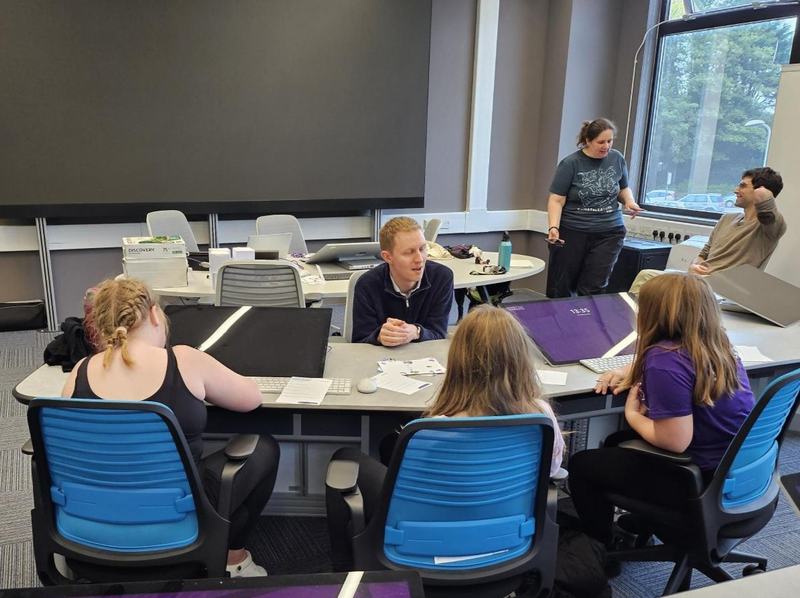
A highlight of the programme was a visit to the University of Portsmouth, where young carers met five space researchers in a “speed dating” format. This created a highly engaging environment where participants could ask direct questions about space science and careers. The level of curiosity and engagement was so high that facilitators had to actively manage rotations between groups.
Creating and performing their own show
The programme placed strong emphasis on youth-led creation. Over several sessions, participants developed a multi-format final performance, going beyond initial expectations. Their final output included a mobile planetarium show, two dance performances and an interactive audience quiz. This was performed three times in one day at The Point Theatre to an audience of young carers, families, community partners and local dignitaries, including the Mayor.
“This project has been so much more than I expected. Just feeling the joy as we learnt space facts and did science together whilst seeing the creativity, enthusiasm and interest they brought to create something uniquely theirs was a privilege” – Practitioner
Evidence of impact
The programme focused on five inclusive participant outcomes social connection, agency, skills, development, belonging and possible selves.
Belonging and social connection
Working closely with trusted youth workers enabled “transferred trust”, allowing participants to quickly feel comfortable with facilitators and new experiences. Delivering sessions across multiple locations helped participants extend their sense of belonging from familiar settings into new environments such as universities and science centres.
Strong peer relationships developed, with participants forming a cohesive group identity and supporting each other throughout the creative process.
Agency and ownership
Participants thrived during idea generation and creative development sessions, where they had full control over the direction of their final output. Their ownership of the project was evident in the pride they showed during the final performances and in their willingness to share their work with others.
Skills development
The programme developed a wide range of skills, including communication, presentation, teamwork, collaboration, technical and scientific understanding. Unexpected outcomes also emerged. For example, one participant reported significant improvement in literacy through reading and practising their planetarium script, ultimately delivering it confidently during the final performance.
Possible selves
Engagement with researchers and immersive science environments helped participants begin to see themselves in relation to science and future opportunities. Participants adopted identities as “space experts,” sharing knowledge at home and within their communities, demonstrating a shift in confidence and self-perception.
What worked well
Strong partnership model - Each partner contributed their expertise effectively—science delivery, youth support, research knowledge and event production—creating a well-rounded programme.
Youth-led approach - Allowing participants to design and lead their final output resulted in deeper engagement and more meaningful outcomes than a facilitator-led model.
Working through trusted relationships - Supporting, rather than replacing, the role of youth workers helped build trust quickly and strengthened engagement.
Challenges and learning
A key learning was the importance of not taking ownership of relationships with participants, but instead working through community partners who already have established trust. This approach enabled facilitators to focus on delivering high-quality activities while ensuring participants felt supported and understood.
The project also highlighted the value of flexibility in attendance and engagement, recognising the realities of young carers’ lives.
"It has been an absolute pleasure to support the young people as they have created their very own planetarium show. It was a real joy to watch them share their newfound space knowledge with their families in their own way whether that was through dance, games, presenting the planetarium show, or operating the planetarium itself." – Practitioner