Inclusion Days at Xplore!
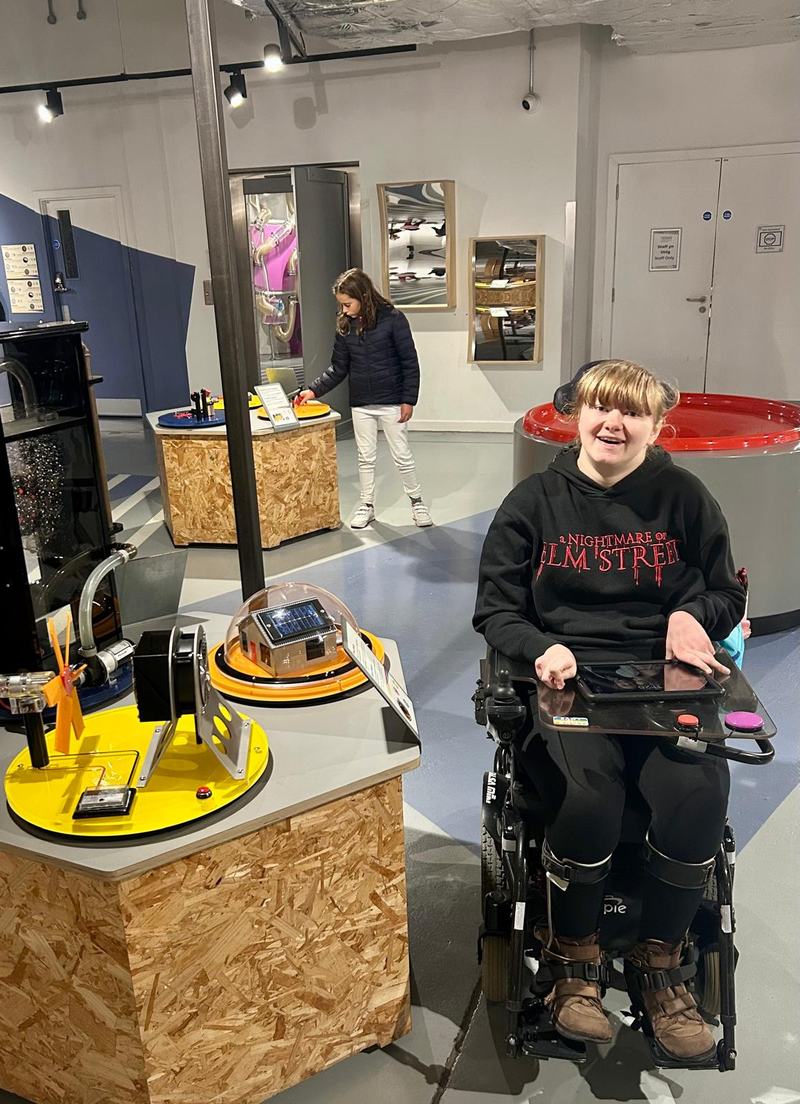
Xplore! delivered two Inclusion Days designed to make science accessible, engaging and meaningful for families with children with additional needs. Through a mix of artificial intelligence and space science activities, participants explored complex topics using hands-on, sensory and creative approaches.
Xplore! delivered two Inclusion Days designed to make science accessible, engaging and meaningful for families with children with additional needs. Through a mix of artificial intelligence and space science activities, participants explored complex topics using hands-on, sensory and creative approaches.
From training AI through games and drawings to launching rockets and exploring thermal imaging, the programme created memorable “wow” moments that sparked curiosity and built confidence. By combining inclusive design with strong community partnerships, the Inclusion Days helped families feel a sense of belonging in a science centre environment—many for the first time—while demonstrating that science is for everyone.
Co-creation with a Community Group
This programme was delivered in partnership with four organisations supporting young people with additional needs, disabilities and autism:
- Your Space
- Autistic Haven
- Conwy Connect
- PIWS
These partners played a key role in bringing families to the events and supporting participants throughout, ensuring that delivery was responsive to their needs.
Participants were families with children aged 5+, supported by organisation leaders and staff. Many attendees were visiting the science centre for the first time, highlighting the importance of building trust and creating a welcoming environment.
All activities took place at Xplore! Science Discovery Centre, where the environment was carefully adapted to support inclusion. Alongside access to the main exhibition space and drop-in activities, a dedicated quiet room was provided, featuring sensory resources such as beanbags, blackout tents and tactile materials. This ensured that participants could engage in ways that felt comfortable and manageable.
Activities and STFC science topics
The Inclusion Days explored artificial intelligence, machine learning, space science and astronomy, linking to research areas supported by the Science and Technology Facilities Council.
Event 1: Artificial Intelligence and Machine Learning
Activities introduced complex computing concepts through playful, hands-on experiences:
- MENACE Noughts and crosses – families played against an AI system that improved over time, demonstrating machine learning through experience
- Quick, Draw – participants contributed drawings to a global dataset, helping train AI systems
- LEGO programming – building and coding simple moving models
- LEGO “hallucinations” – exploring how AI makes assumptions from incomplete information
- Machine Learning drawing game – refining drawings based on increasing data, mirroring how AI improves accuracy
These activities made abstract concepts like AI learning processes tangible and accessible.
Event 2: Space science and astronomy
The second event focused on space science through creative and sensory-rich activities:
- Moon craft – creating textured lunar surfaces using paint and tactile materials
- Rocket launches – designing and launching model rockets using foot pumps
- Infrared camera experiments – exploring heat, light and thermal imaging
- Constellation AI challenge – plotting and connecting stars to reveal constellations
- Match the planets – using sensory objects to learn about celestial bodies
These activities combined scientific exploration with sensory engagement, ensuring accessibility for a wide range of needs.
The majority of my families had never been to Xplore and said they would definitely visit again. Thank you for the room… For me to be able to offer my families a whole day of inclusive activities for free was amazing and gratefully received.” - Community partner
Evidence of impact
The Inclusion Days were designed to deliver a range of inclusive participant outcomes: Belonging, social connection, curiosity, engagement, relevance of science and accessible participation.
Belonging and accessibility
Providing a tailored, sensory-friendly environment enabled families to feel comfortable in a science centre setting. The availability of a quiet room and flexible activity formats ensured that participants could engage in ways suited to their individual needs. Many families stayed longer than expected, indicating increased confidence and comfort within the space.
Social connection
The events created opportunities for families to:
- connect with other families with similar experiences
- build relationships with Science Communicators
- engage collaboratively in activities
This helped strengthen both peer networks and connections to the science centre.
Curiosity and engagement
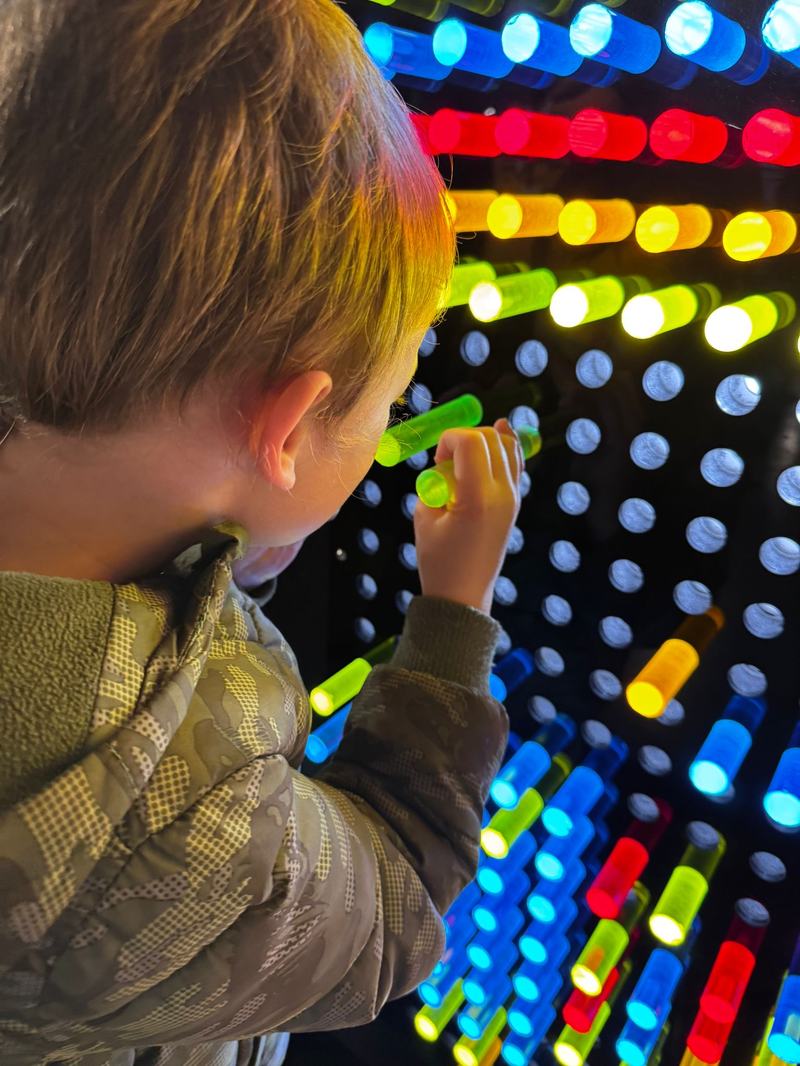
Hands-on, “wow-factor” activities sparked curiosity, with participants returning to activities multiple times—particularly the AI-based games where outcomes evolved over time.
The combination of tactile, visual and digital experiences ensured that participants remained engaged regardless of learning style or ability.
Relevance and meaning
Activities were designed to demonstrate how complex scientific concepts—such as AI and space science—relate to everyday life and future technologies. Participants were able to see that STFC science is not only accessible but meaningful, helping to shift perceptions about who science is for.
Learnings
What worked well
Highly accessible design - The combination of sensory resources, flexible delivery and supportive staff created an inclusive environment where all participants could engage.
Variety of engagement styles - Offering tactile, creative and digital activities ensured that participants with diverse needs could take part meaningfully.
Strong partner relationships - Working with trusted community organisations enabled effective outreach and supported participants throughout their visit.
Challenges
A key challenge was securing attendance from community groups, with some unable to attend due to staffing constraints or lack of response to invitations. This highlighted the importance of building stronger, ongoing relationships with group leaders and improving communication strategies to support participation. The project also reinforced the value of staff development opportunities, with team members gaining new skills and insights—particularly through external experiences such as engagement with the Royal Astronomical Society.