Exploring "A Different Kind of STEM" Aberdeen Science Centre
Across six weeks in Aberdeen, children, young people and families from two community groups explored “A Different Kind of STEM” through hands-on, inclusive sessions covering Space, Technology, Environmental Science and Matter.
Co-creation with community partners
The first partner, Fersands and Fountain Community Project, supports residents from minority background, including refugees, New Scots and Eastern European families, through informal learning and community services aimed at reducing poverty and improving life opportunities. The project built on a seven-year partnership, creating a strong foundation of trust and continuity. Participants from the Fersands Junior Club included P5–P7 pupils aged 8–12, with an average of 14 young people per session, supported by practitioners. Sessions were delivered after school at Fersands Community Centre, a familiar and trusted local space.
The second partner, Aberdeen City Council Family Learning, works with vulnerable families across the Northfield Associated School Group, including those experiencing low income, unemployment, additional support needs and family challenges. This long-standing collaboration has included previous inclusion-focused programmes, strengthening shared expertise. Sessions with Family Learning involved 15 young people (aged 7–14), around 7 parents and 2 development workers per session. Activities took place at Cummings Park Community
Centre, an accessible and well-used venue for participating families.
Activities and STFC science topics
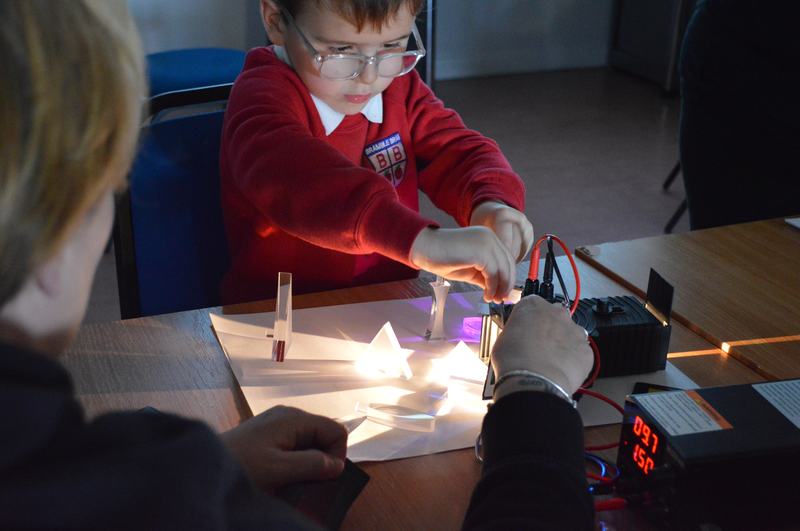
The programme focused on Space, Technology, Environmental Science and Matter, all aligned with Science and Technology Facilities Council (STFC) research themes. Each session combined hands-on experiments, discussion and collaborative challenges, supported by input from STFC researchers Dr Charles Wang and Dr Sandeep George, who contributed expertise and helped develop follow-up learning materials.
Key areas of STFC science covered:
- Space science and exploration: astrophysics, space technology, telescopes and thermal imaging
- Technology, AI and optical physics: computational science, AI and machine learning
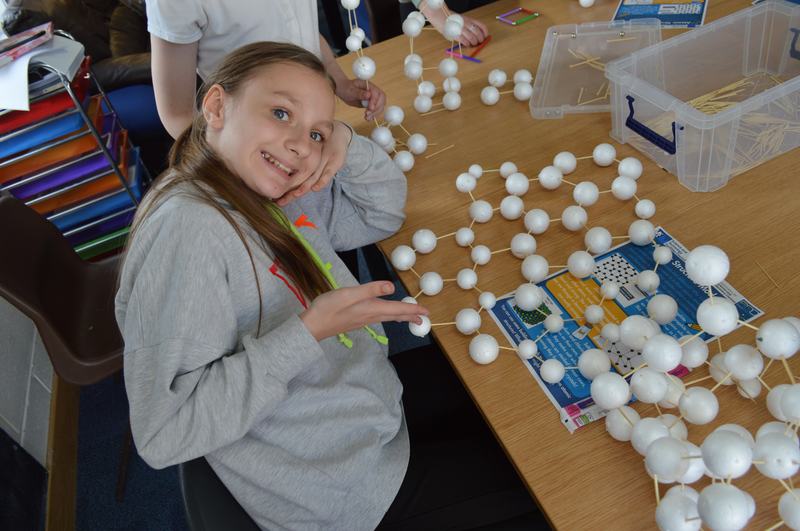
- Matter and particle physics: particle physics, atomic structure and material science
“I am choosing the middle face for all questions because that’s my face. I am having a great time!!” - Child participant who chooses ‘neutral’ for all questions in the feedback. He is a neurodivergent kid who doesn’t smile a lot, but the mum mentioned how excited he is and how happy to attend the sessions.
Project Impact
Co-created learning and reflection
Participants actively shaped the programme through question boards to suggest topics and ideas, group agreements to create a safe and respectful learning space, and weekly follow-up fact sheets answering their questions. This approach reinforced a shared sense of ownership and curiosity, with learning extending beyond each session.
The programme focused on three key inclusive outcomes: Relevance, Social Connection and Belonging.
Igniting curiosity and relevance
Activities were carefully linked to everyday experiences, helping participants see how STEM connects to their lives. Examples included:
- testing sunglasses for UV protection
- exploring how the internet travels via fibre optics
- discussing local research and careers in Aberdeen
These connections helped position STEM as accessible, useful and relevant, particularly for those who may not previously have seen it as “for them.”
Strengthening social connections
The programme nurtured meaningful relationships through collaborative challenges and teamwork, informal social time with snacks at the start of sessions and intergenerational learning between parents and children. Partners observed that teamwork developed into genuine friendships, with improved communication and increased participation across both groups.
Building confidence and belonging
Creating a safe, welcoming environment was central to the programme design. Key approaches included:
- a “no question is a silly question” culture
- consistent routines and clear expectations
- space for participants to explore their own interests
- responsive facilitation, including following up unanswered questions
Participants, many from minority or complex backgrounds, became more confident in asking questions, sharing ideas and engaging with learning.
Learnings
Successful elements included:
- continuous participant input through question boards
- informal social time to build trust and connection
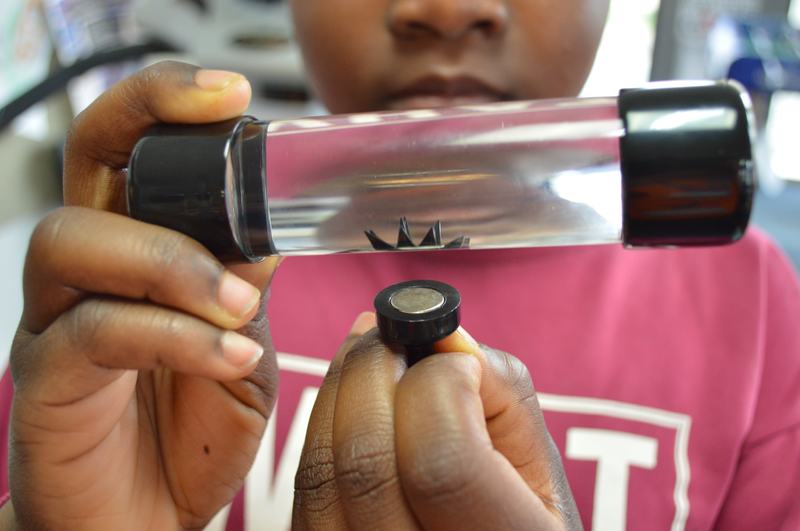
- a balance of hands-on experiments and real-world context
- dedicated staff time to create a supportive, relaxed environment
Challenges and improvements:
- Coordinating delivery alongside researcher input and tight timelines proved demanding
- Standard feedback tools were not always suitable for neurodivergent participants, highlighting the need for more flexible evaluation methods
Future plans
The programme has created a strong legacy:
- both groups have requested further STEM sessions
- participants now associate STEM with familiar, trusted community spaces
- barriers such as “science is not for me” have been significantly reduced
“I will definitely stop wearing cheap sunglasses now that I know my eyes are not protected at all!” Child participant after testing polarised lenses and her own sunglasses.