Creative Space with Cup of Parenting
Creative Space was a five-session co-created programme delivered by Life Science Centre in partnership with the Cup of Parenting community group. Twenty young people aged 8–14 explored space science topics including astronomy, dark matter and big data while developing creative projects inspired by these themes.
Creative Space was a five-session co-created programme delivered by Life Science Centre in partnership with the Cup of Parenting community group. Twenty young people aged 8–14 explored space science topics including astronomy, dark matter and big data while developing creative projects inspired by these themes.
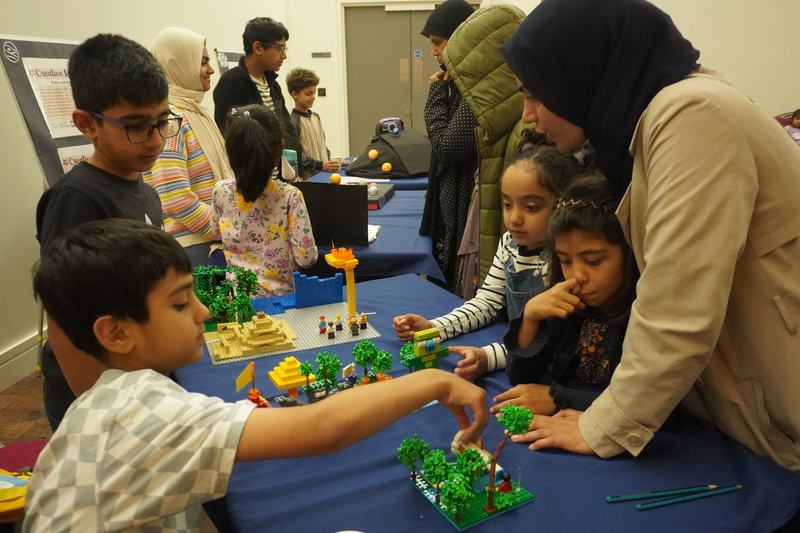
The programme culminated in a public exhibition at Life Science Centre where participants proudly presented their work to family, friends and visitors. Through hands-on making, collaboration with scientists and opportunities for creative expression, the project empowered young people to develop confidence, communication skills and a deeper connection with space science.
Co-creation with a community group
Life Science Centre partnered with Cup of Parenting, a community-driven organisation supporting families and young people—particularly those from underserved and BAMER communities—in the west end of Newcastle. The organisation focuses on empowerment, wellbeing, education and connection through community activities. The group is based in an area ranked within the bottom 6% nationally on the Index of Multiple Deprivation, reinforcing the importance of providing inclusive STEM opportunities for young people who may otherwise have limited access.
The programme involved 20 young people aged 8–14, supported by two 17-year-old youth leaders and one adult leader from the community group. During planning discussions, venues such as the local mosque were considered for the final showcase, but participants chose to host the event at Life Science Centre so families and friends could visit the centre and experience it together. This decision reinforced the group’s sense of ownership over the project.
STFC science topics
The Creative Space programme ran over five sessions: four workshop sessions followed by a public celebration event.
Week 1 – Introduction and exploring space science
Participants began by co-creating a code of conduct, establishing shared expectations for the programme. Team-building activities such as giant marble runs helped build confidence and collaboration. Young people also explored different ways of communicating space science using robot arms and Lego Gaia models. STFC topics: astronomy, big data and high-performance computing.
Week 2 – Dark Matter and Meeting a scientist
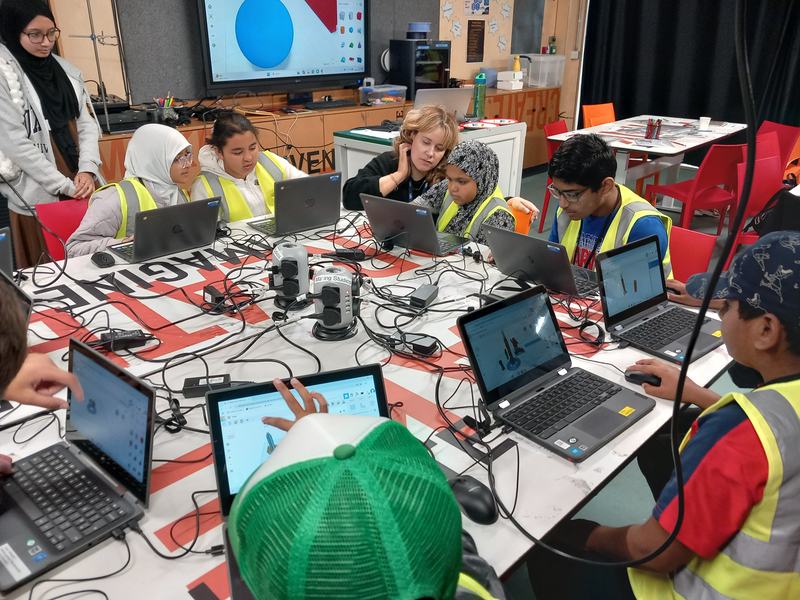
Participants explored dark matter models and the wider mysteries of the universe before meeting Professor Frank Krauss, who discussed his work as part of an international research collaboration involving 4,000 researchers. Another STFC-funded scientist, Professor Richard Massey, was highlighted as a role model even though he was unable to attend in person. The session also introduced 3D printing, constellation-catcher craft activities and planning for participants’ final projects. STFC topics: dark matter, particle physics and big data.
Weeks 3–4 – Creative project development
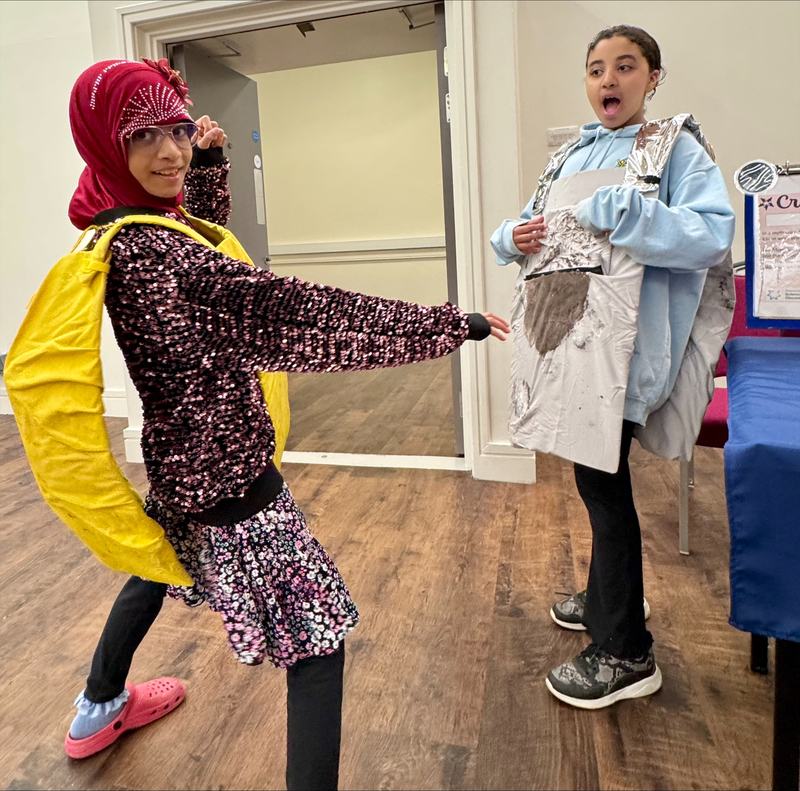
Participants developed individual creative science projects, supported by Life staff and their community mentors. Each young person chose their own idea, resulting in sixteen different projects ranging from artistic interpretations of the solar system to interactive science displays. The sessions focused on creativity, making and strengthening the links between each project and STFC science themes.
Week 5 – Public celebration event
The programme culminated in a mini-exhibition at Life Science Centre where participants presented their projects to friends, families and members of the public. Most projects related to astronomy, solar and planetary science, with some exploring ideas connected to dark matter and big data. Participants created information sheets explaining the science behind their work, turning them into young science communicators.
“They are amazing, I’ve learnt so much from them explaining science to me.” – Parent at the celebration event
Evidence of impact for participants
The programme was designed around four inclusive participant outcomes: agency and ownership, relevance, social connection and skill development.
Agency and ownership
Giving young people full freedom to design their own projects was one of the programme’s greatest successes. Instead of choosing from preset options, participants developed their own ideas, leading to a wide variety of creative outcomes and a strong sense of pride. Over the course of the sessions the young people made the space ‘theirs’ by building up displays/ photos of their work week on week. Each participant received a personal folder containing a notebook, lanyard and a build-your-own Gaia model, which gradually filled with resources and project materials as the weeks progressed.
Relevance
Relevance was the most challenging area to achieve progress in as many of the STFC topics can feel removed from young people’s everyday lives. By making the science content as accessible as possible and trying to present it in novel/hands on ways with a local link wherever possible, we aimed to demonstrate the relevance to the participants and the evaluation questionnaires showed that this had increased slightly by the end of the project.
Social connection
Strong relationships developed between participants, Life staff and the community leaders, with staff commenting on how brilliant it was to see the young people supporting each other to get their projects finished on time. Consistency of staff across sessions helped build trust, while collaborative making encouraged teamwork. The final celebration event highlighted this sense of community, with 75 members of the Cup of Parenting community attending to support the young people.
Skill development
Participants gained both technical and transferable skills, including 3D printing, design thinking, teamwork and communication. A large part of the project was facilitating the development of young people’s ‘soft skills’ including teamwork and communication. Each young person also received an STFC science communicator kit to help them share their knowledge with others after the programme.
Learnings
What worked well:
- True co-creation: Young people helped shape the programme and had full freedom to design their own science projects. It was important to provide at least some ‘scaffold’ in the earlier sessions due to age of the participants (it could have been overwhelming if not) but allowing the flexibility for true choices from the start set the tone for the following sessions.
- Creative science communication: Projects ranged from artistic interpretations such as crocheted solar systems to interactive displays explaining space science concepts.
- Strong community atmosphere: The exhibition event brought together families, participants and the wider community, creating a celebratory environment where young people confidently explained their work.
- Legacy opportunities: Participants received annual memberships to Life Science Centre, encouraging them to return and continue exploring science with their families.
Challenges:
The main challenge involved STFC researcher engagement. Several scientists who had initially agreed to participate withdrew shortly before the programme began, leaving limited time to adjust plans. The researcher who attended provided valuable insight but the presentation required adaptation to better suit the younger audience.
Despite this challenge, the programme remained successful due to the strong partnership between Life and Cup of Parenting and the flexibility of the session design.