A "space takeover" at a community playground
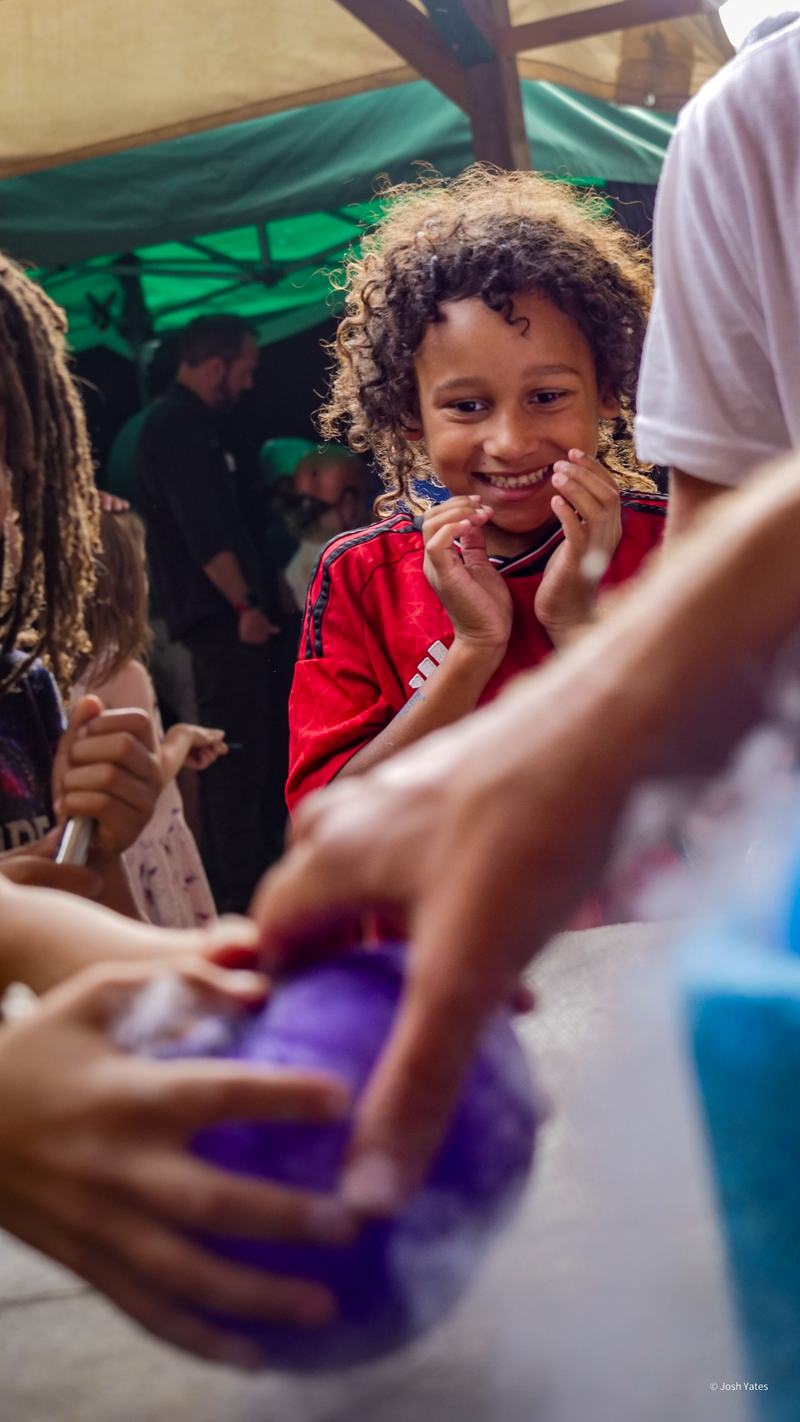
Explorer Dome, in partnership with Eastside Community Trust, staged a “space takeover” at Felix Road Adventure Playground, offering an accessible, engaging, and hands-on science experience for over 175 participants.
Explorer Dome, in partnership with Eastside Community Trust, staged a “space takeover” at Felix Road Adventure Playground, offering an accessible, engaging, and hands-on science experience for over 175 participants. Activities ranged from planetarium explorations of exoplanets and STFC-led experiments to creative graffiti art and astrophotography. Children engaged actively, learning through play, curiosity, and interaction with real scientists.
The programme successfully combined science engagement with community co-creation, delivering tangible inclusive outcomes such as agency, belonging, social connection, and relevance. Its success has led to plans to replicate the model in future projects, ensuring continued engagement with Eastside communities and fostering early scientific curiosity among local children.
Co-creation with a community group
Explorer Dome partnered with Eastside Community Trust (ECT), a Bristol-based charity serving the Lawrence Hill and Easton areas. This catchment is amongst the 10% most
deprived neighbourhoods in the country (IMD 2019), with users closer to 2%. ECT provides community spaces, food support, and activities for all ages, with a focus on connection and opportunity.
The programme took place at Felix Road Adventure Playground, using the playground as a flexible science engagement space. 126 children and 49 adults participated, ranging from toddlers to teenagers, with a concentration of primary school-aged children. A quieter morning session was provided for SEND families to ensure accessibility and inclusion.
Additional contributors included real-life scientists and practitioners:
- Matt Lodge, physicist (Bristol University)
- Yolan Ankaine, quantum engineer (Bristol University)
- Lee Pullen, astrophotographer
- Luke Palmer, graffiti artist
This collaborative approach allowed the playground and science teams to co-design activities that fit the community space while giving children freedom to explore.
STFC science topics
The programme highlighted STFC-related space science through multiple engagement formats:
- Pop-up planetarium: Participants explored space interactively, “flying” to exoplanets via Xbox controllers, linking directly to Matt Lodge’s research on exoplanet atmospheres.
- Curiosity show: A stage-based science demonstration introducing the scientific method and encouraging curiosity.
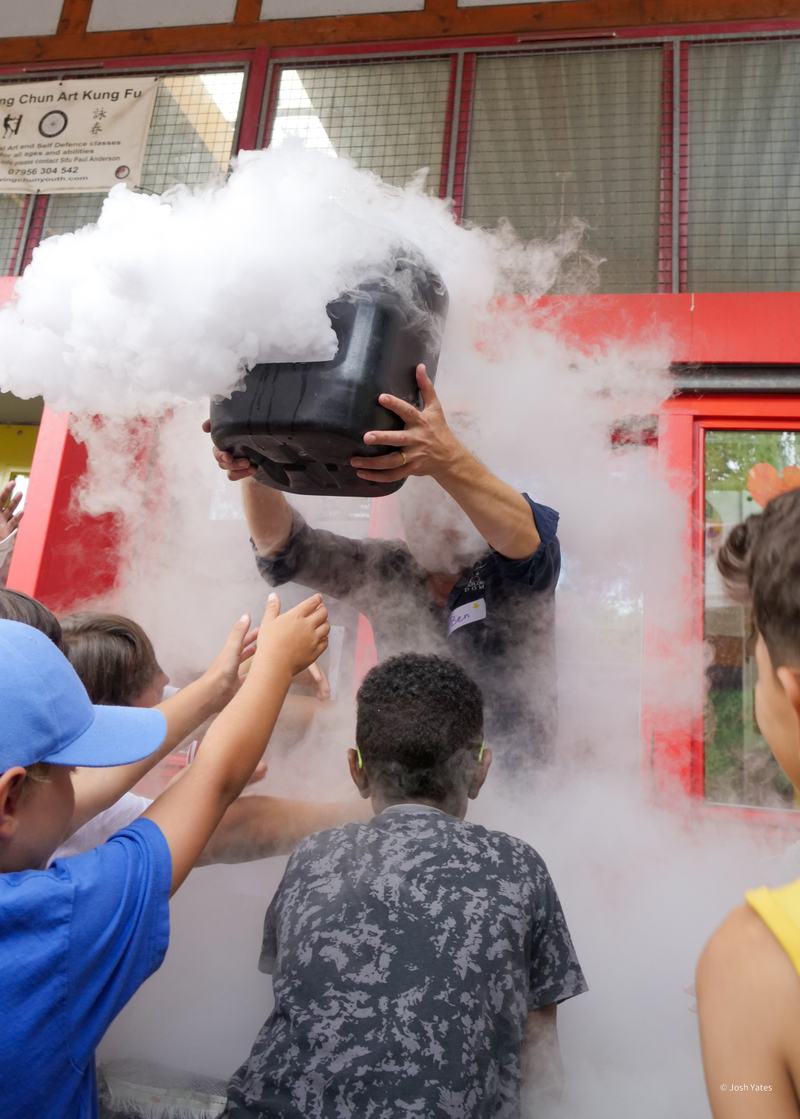
- Science busking: Hands-on tabletop demos including dry ice fog, electrolysis of water (Hoffman voltameter), liquid nitrogen, and meteorite handling. These were designed to be tangible, accessible ways to explore physics, chemistry, and space science concepts.
- Graffiti art: Participants created space-themed artwork, inspired by telescope imagery, combining science and creativity.
- Astrophotography: Lee Pullen shared striking images of nebulae and galaxies, explaining wavelengths of light and “seeing the invisible.”
STFC researchers played a key role in making science accessible:
- Matt Lodge demonstrated gas spectroscopy to explain exoplanet atmospheres.
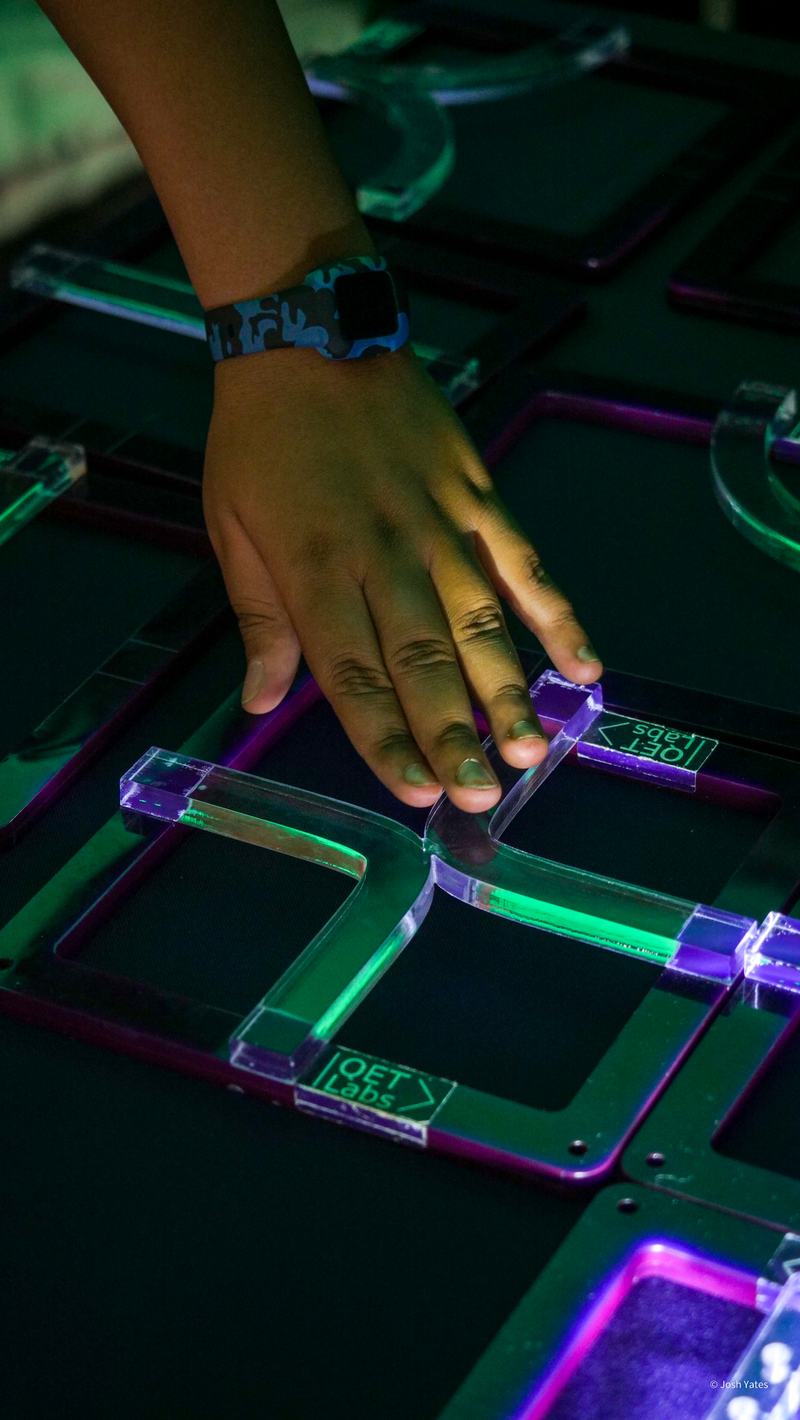
- Yolan Ankaine led interactive games on integrated photonics and quantum technologies, engaging children in hands-on, problem-solving activities.
“It was a lovely day and your whole team were brilliant! One child was even telling a staff member all the things they had learned that day.” – Community Partner
Chosen outcomes
The programme supported multiple inclusive outcomes:
- Agency and ownership: Children engaged on their own terms, choosing activities that interested them and exploring at their own pace.
- Belonging and possible Selves: Seeing and interacting with scientists, particularly Yolan Ankaine as a relatable role model for young women, reinforced representation and the idea that science is for everyone.
- Social connection: Activities encouraged children to explore in friendship groups, sharing experiences and discoveries.
- Relevance and engagement: Practical demonstrations tied science to everyday life, making concepts like electrolysis or propulsion tangible and meaningful.
Learnings
What worked well:
- Hands-on, experiential activities captivated participants and made abstract concepts tangible.
- Role models from the scientific community helped demonstrate the relevance of science and broaden participants’ sense of possibility.
- Inclusive timing and structure – quiet sessions for SEND families ensured accessibility and engagement for all.
- Integration of creativity through graffiti art allowed children to respond artistically to science concepts, enhancing engagement.
- The programme model proved scalable and transferable, informing other community science projects within Explorer Dome.
Challenges:
- Curiosity Show attendance was lower than anticipated, partly due to outdoor venue limitations (sound carried poorly) and the audience having to engage on a fixed schedule rather than their own terms.
- Gauging content relevance was challenging due to the wide age range and abilities of participants.
- Maintaining sustained engagement across multiple formats requires careful planning to balance structured shows with free exploration.